Introduction
How is digital intelligence empowering industrial upgrades? How does “Artificial Intelligence +” open new spaces for industrial development? In China, a rising innovation hub, a vibrant picture unfolds as domestic and foreign companies accelerate the application of AI across various scenarios, integrating it into the future industrial landscape.
AI and Industry at Siemens Technology Conference
At the recent Siemens Technology Conference held in Beijing, a wave of enthusiasm for the intersection of artificial intelligence and industry surged. From industrial AI and digital twins to embodied intelligence, each technology was tangible and engaging. Walking into the technology exhibition area, attendees experienced an immersive glimpse of future industry: enjoying the fun of a claw machine while using Siemens’ intelligent monitoring assistant, OWL, to understand how AI algorithms identify targets, plan paths, and execute tasks precisely.
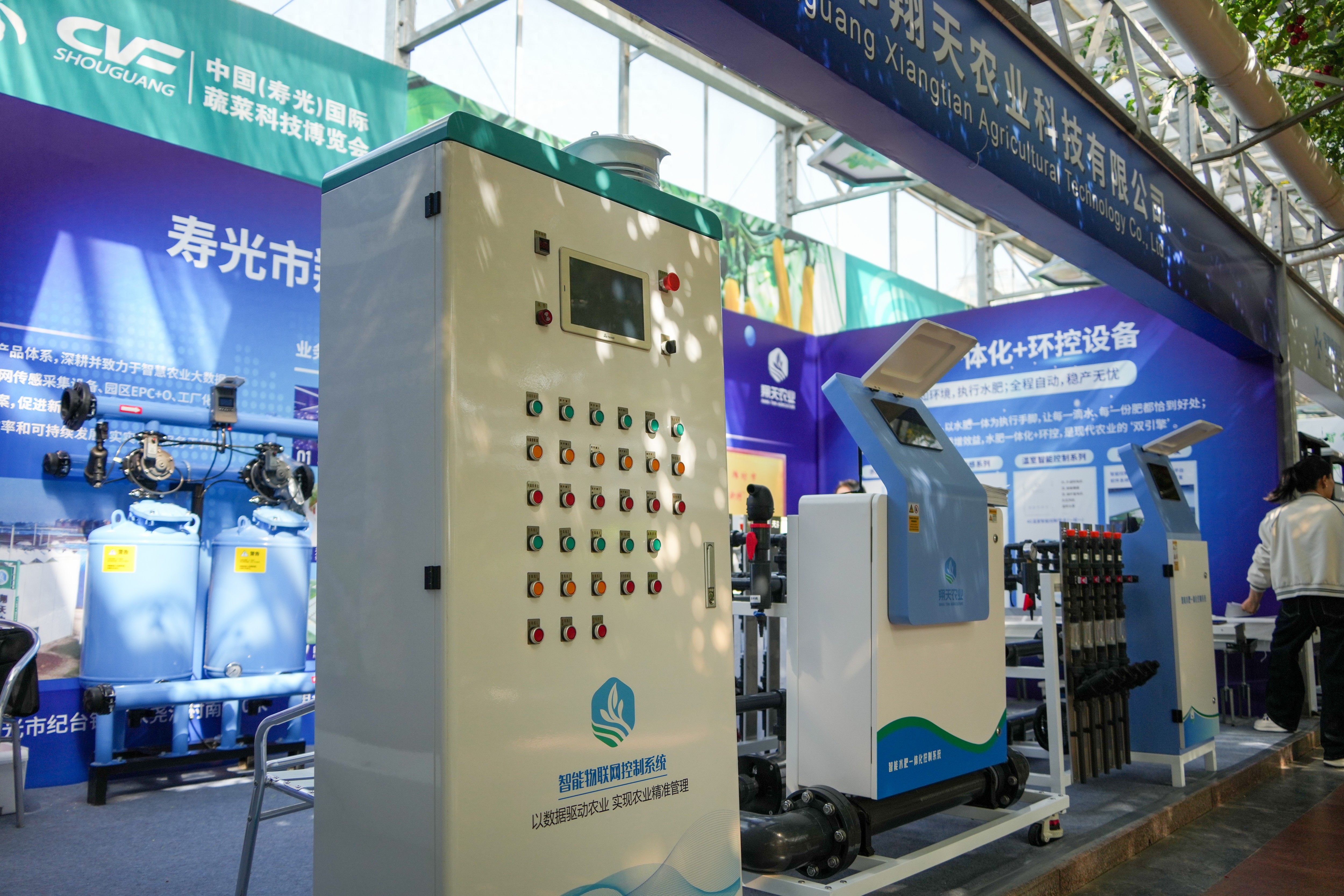
From April 20 to May 30, the 27th China (Shouguang) International Vegetable Technology Expo was held at the Shouguang High-tech Demonstration Garden. This showcased all-weather field environment control equipment.
AI in Agriculture
In Shouguang, known as the “Vegetable Capital,” greenhouses are increasingly adopting AI technologies, with AI algorithms acting as “smart farming assistants” significantly enhancing labor productivity. With sensors for temperature, light, water, and nutrients in the greenhouses, planting data can be transmitted in real-time. Local farmer Yin Jinhua stated that manual control of equipment is no longer necessary; remote control of greenhouses is now possible via smartphones.
When AI algorithms meet seed industry research and development, what sparks will fly? Cheng Lin, director of the Shouguang Vegetable Seed Industry Group’s R&D center, leads a team to establish and improve AI breeding acceleration warehouses, utilizing big data platforms combined with AI for predictive breeding. She explained that with sufficient data, it is possible to predict gene functions, understand market preferences, and even anticipate potential diseases for proactive prevention.
AI in Transportation
Not only in agriculture, but AI is also accelerating its implementation in transportation. At Yutong Bus Co., Ltd. in Zhengzhou, a cute, intelligent connected electric bus named “Xiao Yu” passed by the reporter. Without a steering wheel or manual operation, “Xiao Yu” can autonomously overtake, avoid obstacles, park, and charge. Currently, “Xiao Yu” is in mass operation in cities like Zhengzhou, Guangzhou, Chongqing, and Beijing.
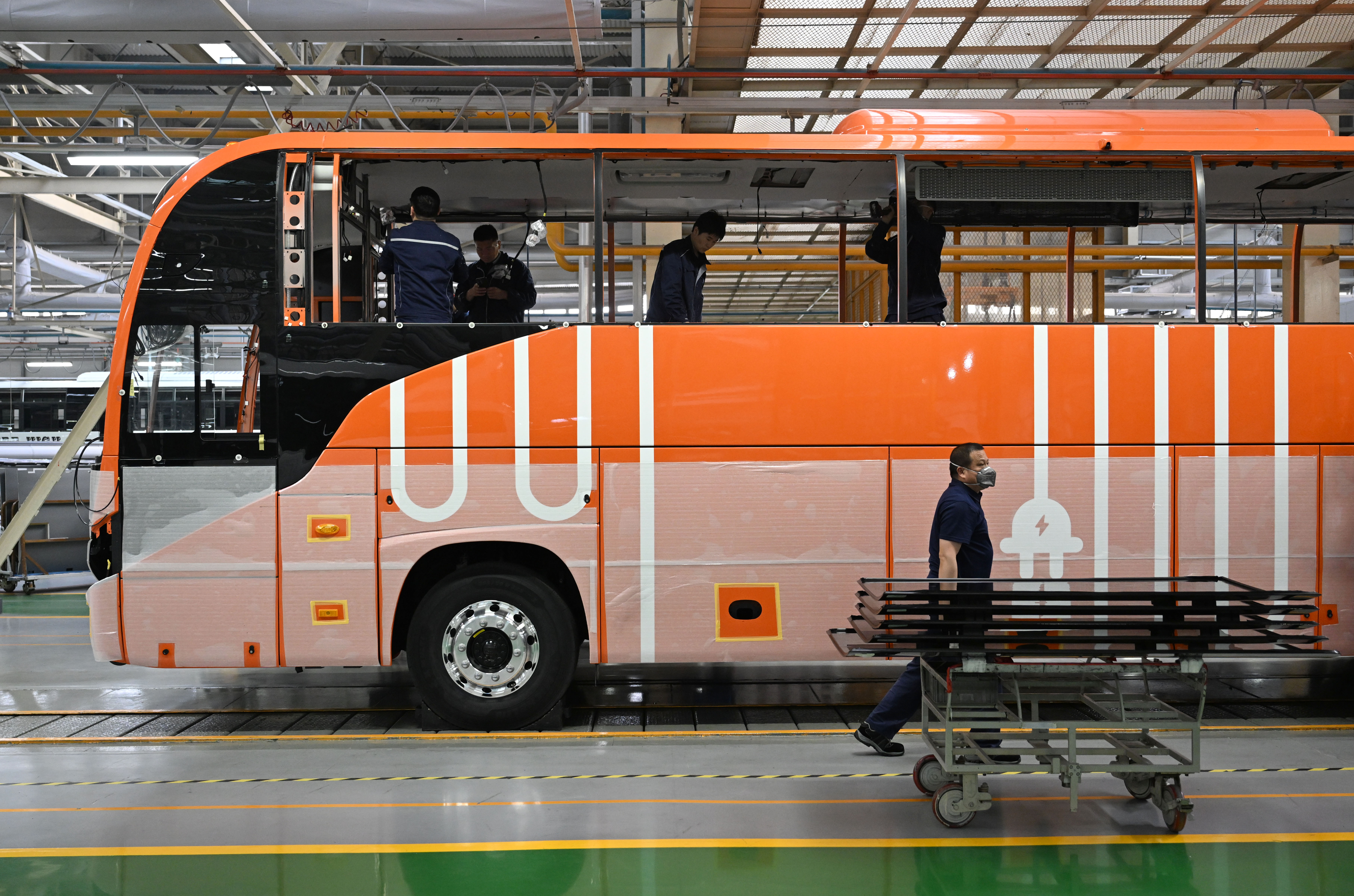
On March 30, staff worked on the production line at Yutong’s new energy plant.
Wang Kun, deputy general manager of Yutong’s Deep Blue Power, mentioned that besides “Xiao Yu,” Yutong’s management platform “Anruitong” is also leveraging AI to enhance operational efficiency. This vehicle networking system assists fleets in intelligent operational management, monitoring vehicle trajectories, energy consumption data, and dangerous driving behaviors, while automatically generating daily reports to support efficient fleet operations.
At the intelligent scheduling center of the Zhoukou Port of Henan Port and Shipping Group, every vehicle entry and exit, cargo stacking, and ship docking relies on the “brain” of the scheduling center for intelligent judgment. Previously, unloading a container required at least 3 to 5 people; now, one operator can manage “remote loading” by looking at a screen and using two small handles. The reporter also saw a cockpit of an unmanned container truck, where operators can remotely control the truck.
Conclusion
These scenes of domestic and foreign companies rapidly integrating AI into reality are supported by China’s vast market space and open innovation ecosystem. From the State Council’s issuance of opinions on deeply implementing the “Artificial Intelligence +” initiative to the 14th Five-Year Plan proposing comprehensive promotion of digital intelligence technology empowerment, AI is becoming a “key variable” driving high-quality economic development in China.
By 2025, China’s core AI industry is expected to exceed 1.2 trillion yuan, with over 6,200 companies; Chinese enterprises have the highest global downloads of open-source large models, significantly lowering the barriers to AI usage. By the end of last year, the application rate of AI technology among large-scale manufacturing enterprises in China exceeded 30%, greatly enhancing the quality and efficiency of design, manufacturing, and quality inspection.
As Siemens’ Chairman of the Board, Roland Busch, stated, China is not only a key market but also one of the world’s important innovation centers for AI. Siemens chose to hold its first technology conference in China because many innovations first occur here, making it often the launch market for new technologies.
An open and innovative China is providing a collaborative and win-win ecosystem for domestic and foreign companies to co-create a new picture of “Artificial Intelligence +,” continuously adding new momentum to its economic development and expanding new spaces for global economic growth.
Comments
Discussion is powered by Giscus (GitHub Discussions). Add
repo,repoID,category, andcategoryIDunder[params.comments.giscus]inhugo.tomlusing the values from the Giscus setup tool.